
What Your Crawl Space Insulation Can Tell You About the Condition of Your Home
Most homeowners rarely think about the insulation beneath their floors. As long as the rooms upstairs feel comfortable, it is easy to assume everything below is working as it should.
However, crawl space insulation can reveal important information about the conditions beneath a home.
Changes in insulation placement, appearance, and condition may point to moisture exposure, airflow problems, plumbing concerns, or other maintenance issues that are not immediately noticeable inside the living space.
For homeowners in Tacoma and throughout the Puget Sound area, understanding these signs can be especially valuable during the wetter months of the year.
Crawl Space Insulation Does More Than Help Keep Floors Comfortable
Insulation beneath your floors helps reduce heat transfer between the living space and the crawl space.
When properly installed and maintained, it can contribute to more consistent indoor temperatures and improved energy efficiency.
But insulation is also exposed to the environment around it.
Depending on the crawl space design, that environment may include:
Moisture rising from exposed soil
Humidity entering through foundation vents
Air movement beneath the floor
Plumbing lines and drain connections
Seasonal temperature changes
Because insulation interacts with these conditions, changes in its appearance may provide useful clues about what is happening below your home.

Damp Insulation May Indicate a Moisture Concern
One of the most important things to notice is whether crawl space insulation appears damp or shows evidence of previous moisture exposure.
Insulation can become wet for several reasons, including plumbing leaks, condensation, water intrusion, or prolonged exposure to humid conditions.
In Tacoma's rainy climate, moisture around the foundation can also influence conditions inside some crawl spaces.
Wet insulation may lose some of its insulating effectiveness, depending on the material and severity of exposure.
Prolonged moisture can also affect nearby wood framing.
The important question is not simply whether the insulation is wet, but where the moisture is coming from.
Replacing damaged insulation without addressing the underlying source may allow the same problem to return.
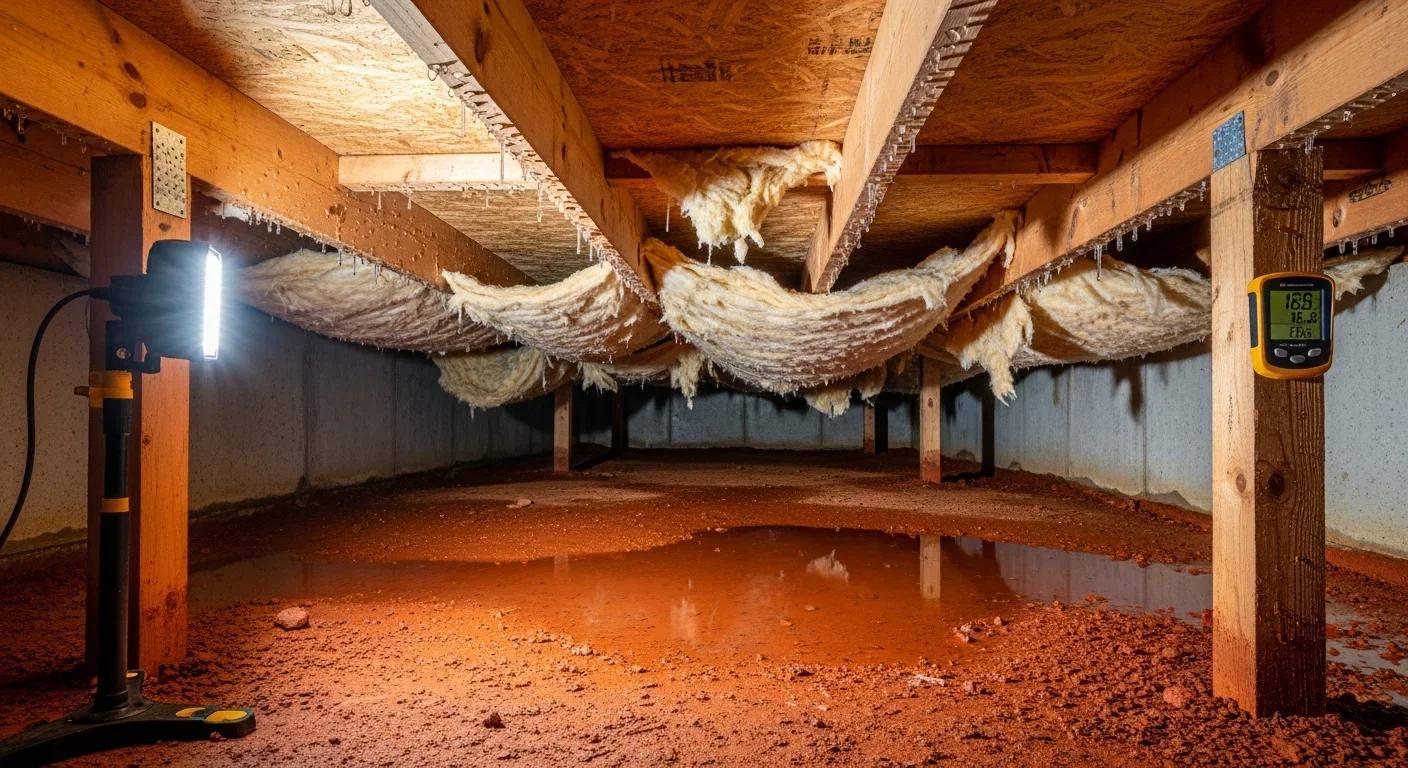
Sagging Insulation Can Reveal Changes Over Time
Insulation installed between floor joists is generally intended to remain securely supported.
Over time, however, some insulation may begin to sag, separate, or fall away from the framing.
This can happen because of:
Moisture exposure
Deteriorating support materials
Improper installation
Previous plumbing or repair work
Physical disturbance within the crawl space
Sagging insulation does not automatically mean there is a serious moisture problem.
However, it does suggest that the insulation is no longer positioned as intended.
When sections pull away from the floor above, they may leave areas with reduced thermal protection.
These gaps can contribute to uneven floor temperatures and make certain rooms feel less comfortable.
Missing Insulation Can Help Explain Cold Floors
Have you ever noticed that one room feels colder underfoot than another?
Sometimes the difference is related to what is happening beneath the floor.
Missing, compressed, or displaced insulation can create areas where heat transfers more readily between the home and the crawl space.
This may be especially noticeable during cooler fall and winter mornings.
For example, insulation may be missing beneath one section of a living room while remaining intact beneath an adjacent bedroom.
Even though both rooms are part of the same house, their floors may respond differently to cold conditions below.
Insulation is not the only possible explanation for uncomfortable floors, but its condition is worth considering when investigating persistent temperature differences.
Insulation Can Reveal the Condition of Nearby Wood Framing
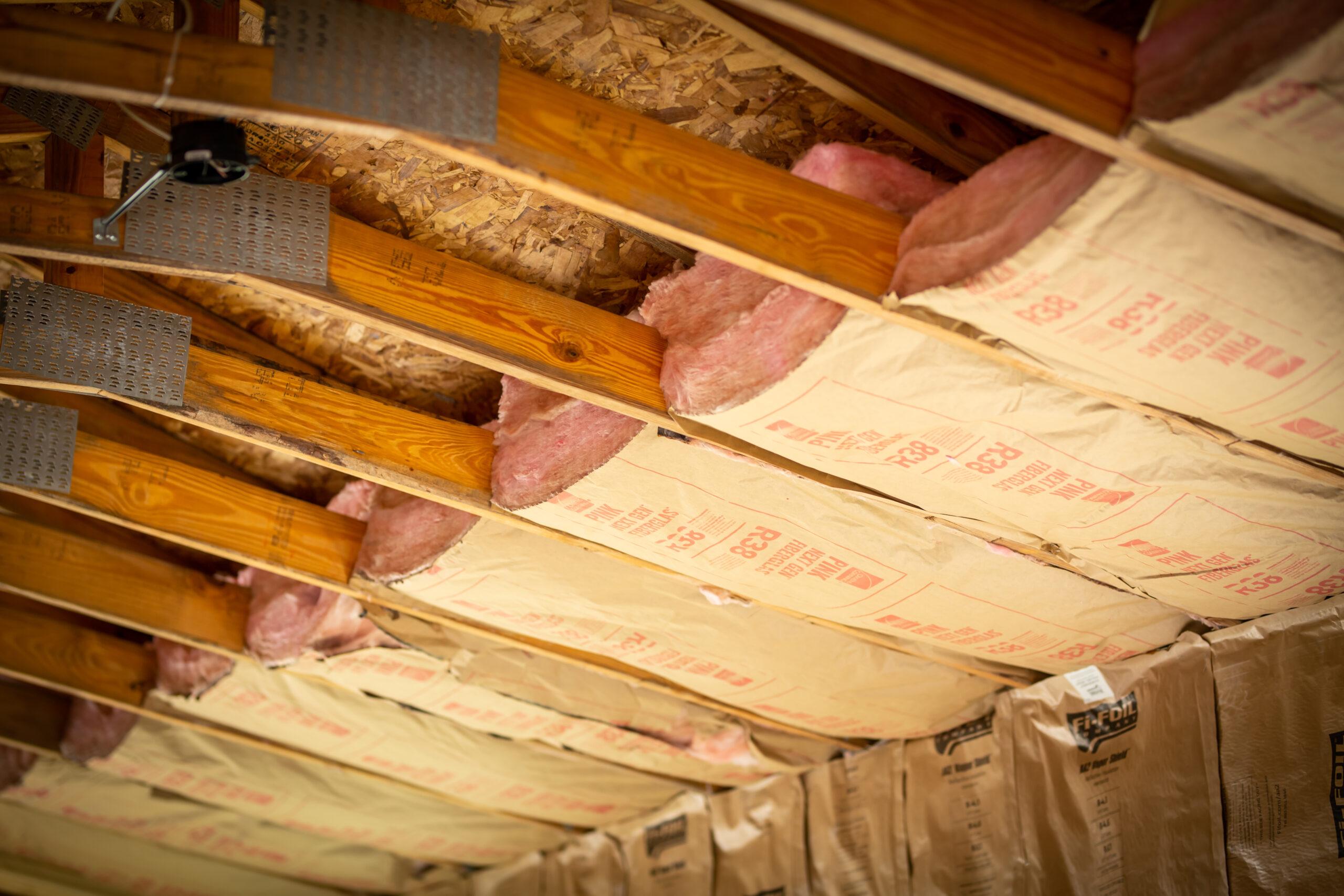
Crawl space insulation is commonly installed near wooden floor joists and subfloor materials.
When insulation becomes displaced or damaged, previously covered framing may become visible.
This can create an opportunity to observe conditions that are otherwise difficult to see.
Potential concerns include:
Dark staining on wood surfaces
Signs of prolonged moisture exposure
Visible fungal growth
Deteriorating or damaged framing
Unusual discoloration around plumbing
Not every stain indicates active damage, and appearance alone cannot establish whether wood is structurally compromised.
However, visible changes may justify a closer professional evaluation.
The relationship between insulation and framing is important because both are affected by the environment inside the crawl space.
Seasonal Moisture Can Affect Insulation Differently
Crawl space conditions do not remain identical throughout the year.
During the drier summer months, some crawl spaces may experience lower ground moisture and different humidity patterns.
As fall progresses into winter, repeated rainfall and cooler temperatures can change those conditions.
In the Puget Sound region, prolonged damp weather may increase the importance of moisture management around and beneath homes.
However, the effects depend on the crawl space design, ventilation, ground covering, drainage, and insulation materials.
A crawl space with effective moisture control may behave very differently from one with exposed soil or recurring water intrusion.
This is why insulation should be evaluated as part of the entire crawl space environment rather than as an isolated component.
Plumbing Leaks Can Leave Clues in Insulation
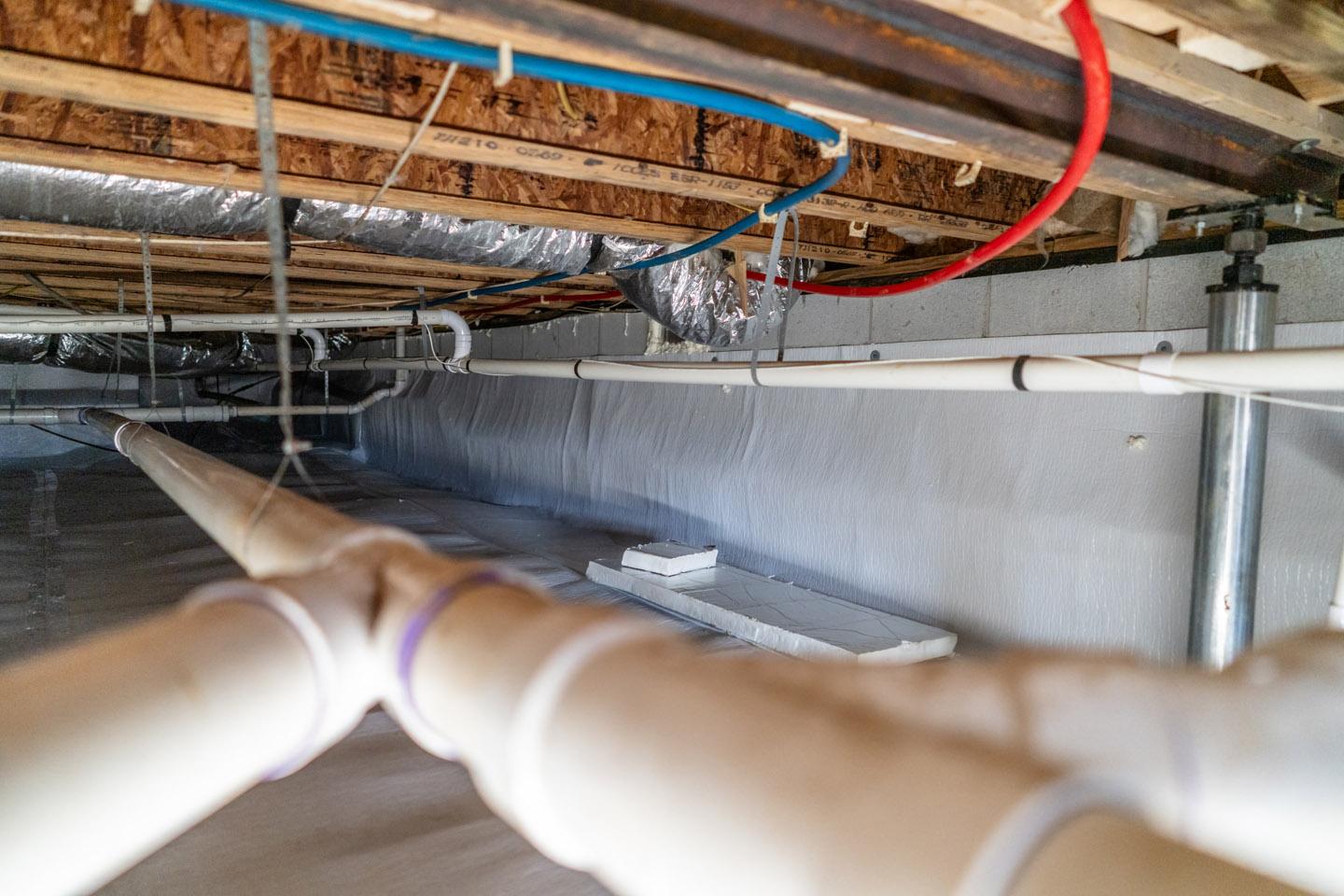
Some plumbing supply lines and drainpipes run through crawl spaces beneath kitchens, bathrooms, and laundry rooms.
When a connection develops a slow leak, the first visible signs may appear below the living space.
Nearby insulation may become damp, discolored, or displaced.
A small leak can remain unnoticed upstairs, particularly when water escapes beneath the subfloor rather than onto a finished floor.
Areas around plumbing penetrations and connections deserve attention because moisture may affect nearby insulation and framing.
If plumbing is responsible, repairing the leak is the priority.
Any affected insulation and surrounding materials should then be assessed to determine whether drying, cleaning, or replacement is necessary.
Insulation Problems Can Influence Energy Efficiency
Insulation is intended to help maintain a thermal boundary between conditioned living areas and spaces with different temperatures.
When insulation becomes compressed, damaged, or incomplete, its effectiveness may decrease.
The result can include greater heat transfer through the floor.
Depending on the home's construction, this may contribute to:
Colder floors during winter
Uneven temperatures between rooms
Increased heating demand
Reduced indoor comfort
However, insulation performance also depends on air sealing, installation quality, and the overall crawl space design.
Adding more insulation is not always the correct first step.
If moisture or air leakage is contributing to the problem, those conditions may need to be addressed before insulation improvements are made.
Not Every Crawl Space Needs the Same Insulation Approach
There is no single insulation arrangement that works best for every home.
Some homes have traditional vented crawl spaces with insulation installed between floor joists.
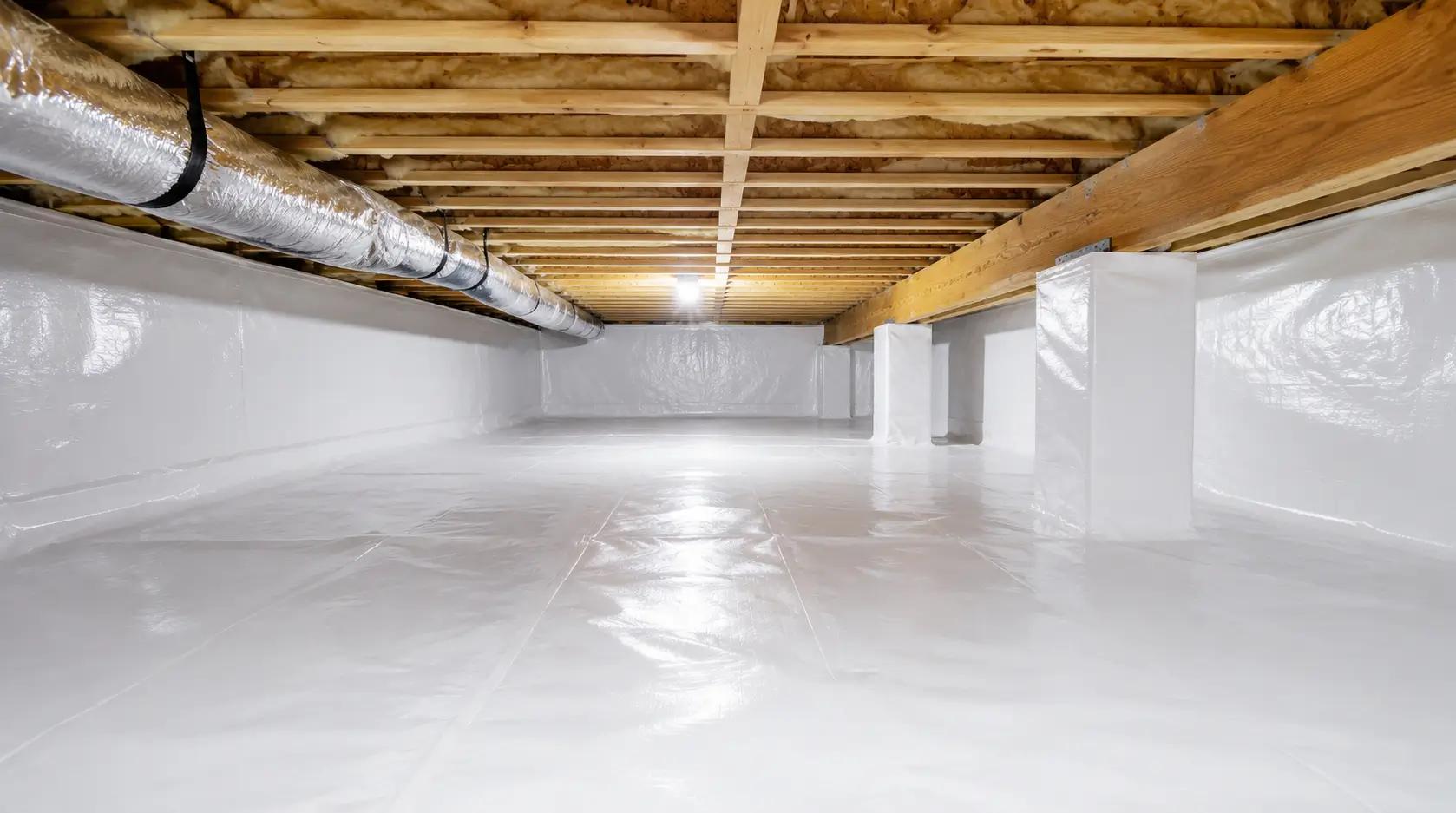
Others have sealed or encapsulated crawl spaces where insulation may be installed along foundation walls as part of a different thermal and moisture-control strategy.
The appropriate approach depends on factors such as:
Crawl space ventilation and conditioning
Foundation construction
Ground moisture conditions
Existing insulation materials
Local building requirements
Overall moisture-control strategy
This distinction matters because insulation that appears missing in one type of crawl space may not be required in the same location in another.
Understanding the design of the space is essential before deciding what should be repaired or replaced.
Healthy Crawl Spaces Require More Than Good Insulation
Insulation is only one part of a healthy crawl space.
Even high-quality insulation may struggle to perform as intended when surrounding moisture or airflow problems remain unresolved.
A comprehensive approach considers the relationship between insulation, drainage, ground moisture, plumbing, ventilation, air sealing, and wood framing.
For Tacoma homeowners, this is particularly relevant as seasonal rainfall changes the conditions around residential foundations.
Routine awareness can help identify developing concerns before they become more extensive.
Homeowners should avoid entering crawl spaces with standing water, exposed electrical hazards, unstable conditions, or suspected contamination. A qualified professional can evaluate areas that are difficult or unsafe to access.
Your Crawl Space Insulation Can Tell a Bigger Story
Crawl space insulation does more than help regulate the temperature of your floors.
Its condition can provide useful information about moisture exposure, plumbing issues, airflow, and the overall environment beneath your home.
Sagging, damp, missing, or displaced insulation does not always indicate a major problem, but these changes deserve attention.
For homeowners in Tacoma and throughout the Puget Sound area, understanding what crawl space insulation may be revealing is an important part of maintaining a comfortable, efficient, and well-cared-for home.
At All-Shield Crawl Spaces, we believe that understanding the conditions beneath your home is an important step toward protecting the home above.
